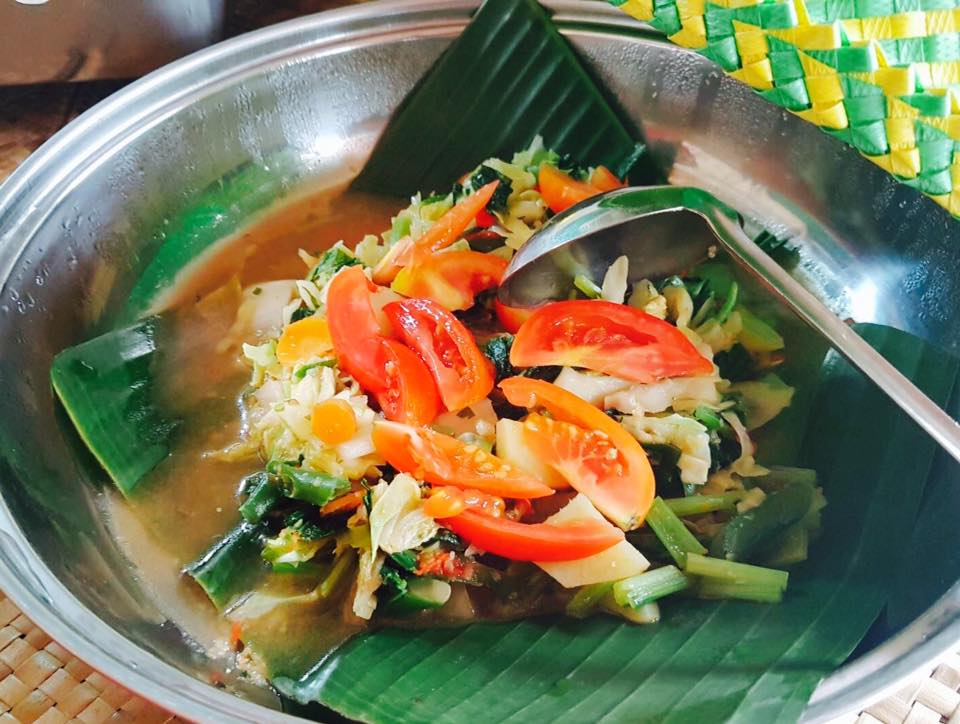
Balinese cuisine has its own charm for the foodies because it is always in racik with strong spices and spicy spices. This time we collect 9 Typical Balinese Foods that You Must Try and where you can find this cuisine.
By becoming a culinary tour you can try all types of Balinese cuisine,
In addition you can also join the cooking class in bali with us, which will serve a variety of Balinese cuisine, by joining us at
SUBAK COOKING CLASS,
WA: +6281238879210
www.balitourislandubud.com
cookingclassinubudbali.blogspot.com
A.Sate Lilit Bali
Picture by Subak cooking class

 In contrast to the sate in general, the meat is pierced, Sate Lilit actually made with a way in wrap. Previously, the meat will be finely chopped first and in ramu with Balinese spice.
Then, in wrap on the leaves of lemon grass or bamboo stalk. It feels soft and savory! Especially on the sate wrap that uses lemongrass leaves, you will smell the delicious fragrance.
In general, meat used, among others, chicken meat, pork, or fish mackerel. However, sate wrapped with mackerel fish meat is the prima donna in Bali.
cookingclassinubudbali.blogspot.com
B. Lawar Kuwir
Picture by pegimakan.id

Lawar is a mixture of vegetables and minced meat in special ramu using Balinese spices.
Lawar is generally processed using a mixture of pork, but it turns out that entog duck (kuwir) is also an alternative meat favorites by the people of Bali.
Usually meat that has been chopped entog will be mixed with pieces of vegetable beans and long grated coconut and smeared Balinese spice.
Lawar Kuwir this will be more delicious if eaten with warm white rice with satay lilit, peanuts, suwiran Ayam Betutu, and a bowl of jukut ares (vegetable banana stem).
cookingclassinubudbali.blogspot.com
C.Betutu Chicken (Ayam Betutu)
Picture by tokomesin.com

Who has never heard of Betutu Chicken? This one menu should not be missed in your culinary tour list in Bali. It has become a typical Balinese food icon.
If you like spicy cuisine, be prepared to fall in love with the Betutu spice with spicy addictive textures.
Uniquely, the spice is inserted into the inside of a chicken stomach. Then the meat is wrapped in banana leaves and roasted with firewood chaff that takes up to 24 hours, in order to produce a savory taste, soft and spicy authentic.
Oh yes, Betutu is not always identical with chicken meat, some also use duck.
cookingclassinubudbali.blogspot.com
D.Babi Guling
 |
| Picture by Tripadvisor |
It should be underlined and in bold, that this one hundred percent food is not kosher. Even so, this food is the main culinary destination for the people of Bali and local tourists.
The brownish brown skin color of Babi is really crunchy on the tongue. Moreover, the meat is so soft and rich in spices. Uniquely, the genesis of Balinese base flavor and cassava leaf vegetable is put into the pig's belly and rolled over the embers.
Menu Pork Guling usually served with warm white rice with lawar, satay wrap, and a bowl of jukut ares.cookingclassinubudbali.blogspot.com
E.Nasi campur Bali

If you do not have enough time to taste all the menus above, you can enjoy the culinary variety of the Island of the Gods as well as in one plate, loh!
Sate lilit, suwiran ayam sisit Basa Genep Balinese spice, vegetable urap, and chicken lawar ready to eat accompanying warm white rice. Enjoy the delicacy of Nasi Campur Ayam Bali, when you mix it with sambel matah and sambel embe typical of Bali.
Interestingly again, this menu always comes with a variety of dishes in every restaurant in Bali, for example there are serving with chicken betutu, tomato chili egg, fried chicken skin, spicy tuber leaves, pindang fish, and sprinkling fried peanuts.
cookingclassinubudbali.blogspot.com
F.Rujak Kuah Pindang
 |
| picture by imgrum.org |
Feel the sensation of spicy as well as fresh on the tongue, when you eat a slice of mango with a mixture of Pindang Sauce and super spicy chilli. Not only mango, you can also replace the stuffing with a mixture of various types of fruit or even seaweed.
In Bali, rujak seaweed that uses pindang sauce is known as Rujak Bulung. Happy trying the fresh sensation that comes from a combination of seaweed and sauce pindang!
cookingclassinubudbali.blogspot.com
G.Serombotan
 |
| picture by travel.kompas.com |
If in the west there is famous for salad and in Java is very synonymous with vegetable urap, Bali is no less identical to the typical vegetable culinary named Serombotan. This typical culinary Klungkung serves a mixture of vegetables such as long beans, spinach, kale, beans, round eggplant, bean sprouts, and pare.
Meanwhile, the marinade known as Kalas, which is a kind of coconut milk containing a mixture of turmeric, galangal, onion, garlic, coriander and kencur. This seasoning is combined with peanut sauce and spicy seasoning.
cookingclassinubudbali.blogspot.com
H.Tipat Blayag
 |
| picture by moola.id |
cookingclassinubudbali.blogspot.com
I.Nasi Tepeng
 |
| picture by fispol.com |
Rice Tepeng is a typical food from Gianyar which is served quite mushy like porridge. The spice blend of Balinese spices sprinkled on top of Tepeng is the main attraction. No wonder the spicy taste is powerful to shake the tongue.
Long beans, red beans, young jackfruit, eggplant, moringa leaves, and grated coconut are some vegetables that often complement this Nasi Tepeng. As for the side dishes usually there are eggs and suwiran fried chicken. The way of presentation is unique, namely by using banana leaves.
cookingclassinubudbali.blogspot.com
Creat by Subak cooking class
#cookingclassinbali#cookingclassinubud#balicookingclass#Balicookingschool#ubudcookingschool